


IDRC Held Roundtable Discussion with Research for Development Partners in Sierra Leone
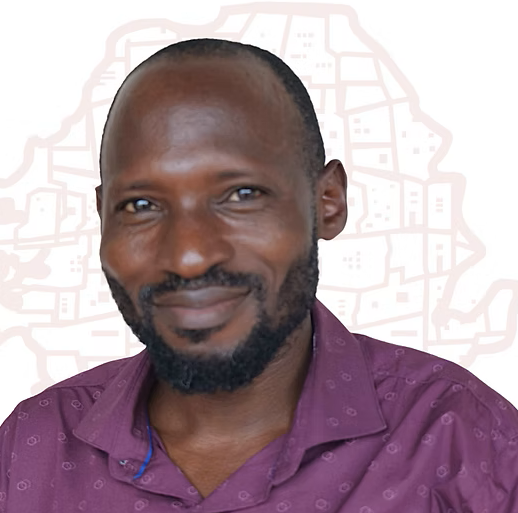
Marie-Gloriose Ingabire, the Regional Director of the International Development Research Centre (IDRC), held a roundtable discussion with partners including the Sierra Leone Urban Research Centre, URBAN TRACS partners, the National Council for Science, Technology and Innovation, Sierra Leone (NSTIC-SL), the 50-50 Group of Sierra Leone, universities, and other IDRC implementation partners on 7 October at the SLURC office, 17 Hill Cot Road, Freetown.

"The roundtable discussion is to know what you (partners) have been doing in research for development, what the emerging issues are, and what could be added to our strategy in a rapidly changing environment", the Regional Director said, highlighting that IDRC has four programme priorities: Climate Change, Health, Economy & Justice, and Education & Science.
In his welcome address on behalf of the partners in Sierra Leone, Joseph Macarthy, SLURC's Executive Director, said they were delighted to receive the Regional Director. He added,
"IDRC's support for development research in Sierra Leone is making an important contribution to building knowledge, strengthening local capacity and informing solutions to the challenges facing our communities.
Dr Macarthy expressed optimism for a constructive, forward-looking discussion that would allow partners to share experiences, reflect on progress and challenges, and explore opportunities to deepen collaboration on local responses to local priorities that contribute to lasting impact. He said,
Partner Updates
The Regional Director opened the discussion by asking partners to share updates on their implementation and workstreams.
Professor Rashid Ansumana discussed their One Health research on disease prevention targeting four West African countries: Sierra Leone, Liberia, Guinea and Nigeria.
The URBAN TRACS Consortium discussed the research project, Transformative Research for Adaptation to Climate Change in Informal Settlement, implemented by SLURC, IGCHR and CODOSAPPA, which is piloting climate-resilient housing for informal communities in Freetown, including Moyiba, CKG and Susan's Bay.
Prof Jonas Redwood-Sawyerr, board chairman of the National Council for Science, Technology and Innovation, Sierra Leone (NSTIC-SL), discussed their research, including the nutritional value of many plants in Sierra Leone that support the Feed Salone initiative.
The 50-50 Group of Sierra Leone mentioned their work on governance, justice, equity, and accountability.
Sustainability and Knowledge Uptake
Marie-Gloriose also expressed interest in research-for-development opportunities in Sierra Leone and private-sector engagement. In response, discussants focused on project sustainability, including empowering beneficiaries and volunteer groups; increasing knowledge uptake through media and Civil Society Groups; and building systems and structures for sustainability, including multi-sectoral coordination and advocacy for the Government of Sierra Leone to invest in research.
Private Sector Engagement
On private sector involvement, discussants focused on building organised systems around the private sector. This included increasing collaboration with the private sector, bringing them in early in the research process, and creating a platform for engagement.

Next Steps
At the end of the discussion, the partners agreed to continue collaborating, with Professor Jonas Redwood-Sawyerr leading the group.
Comments